Intellectual Property

Needles & Stitches: Understanding the Nigerian Intellectual Property Rights in Fashion Law

Nigeria’s fashion industry is booming, but its IP framework hasn’t caught up — the Copyright Act and Patents and Designs Act were never built with fast-moving fashion trends in mind.

Steve Austin Nwabueze & Damilola AladaPartner · Intellectual Property5 October 2026 10 min read

Last reviewed 5 October 2026

01 / 08

Abstract

Fashion labels and brands have become more protective of their intellectual property rights. This consciousness is undoubtedly more pronounced in Europe and North America; sub-Saharan Africa, and Nigeria in particular, are still playing catch-up. The fashion industry in most parts of Nigeria and sub-Saharan Africa involves a great deal of innovation and creation, yet the owners of these labels give little thought to the issues of intellectual property protection, even though intellectual property laws do protect fashion. This article explores the challenges of an inadequate regulatory framework in this respect, and makes a case for change.

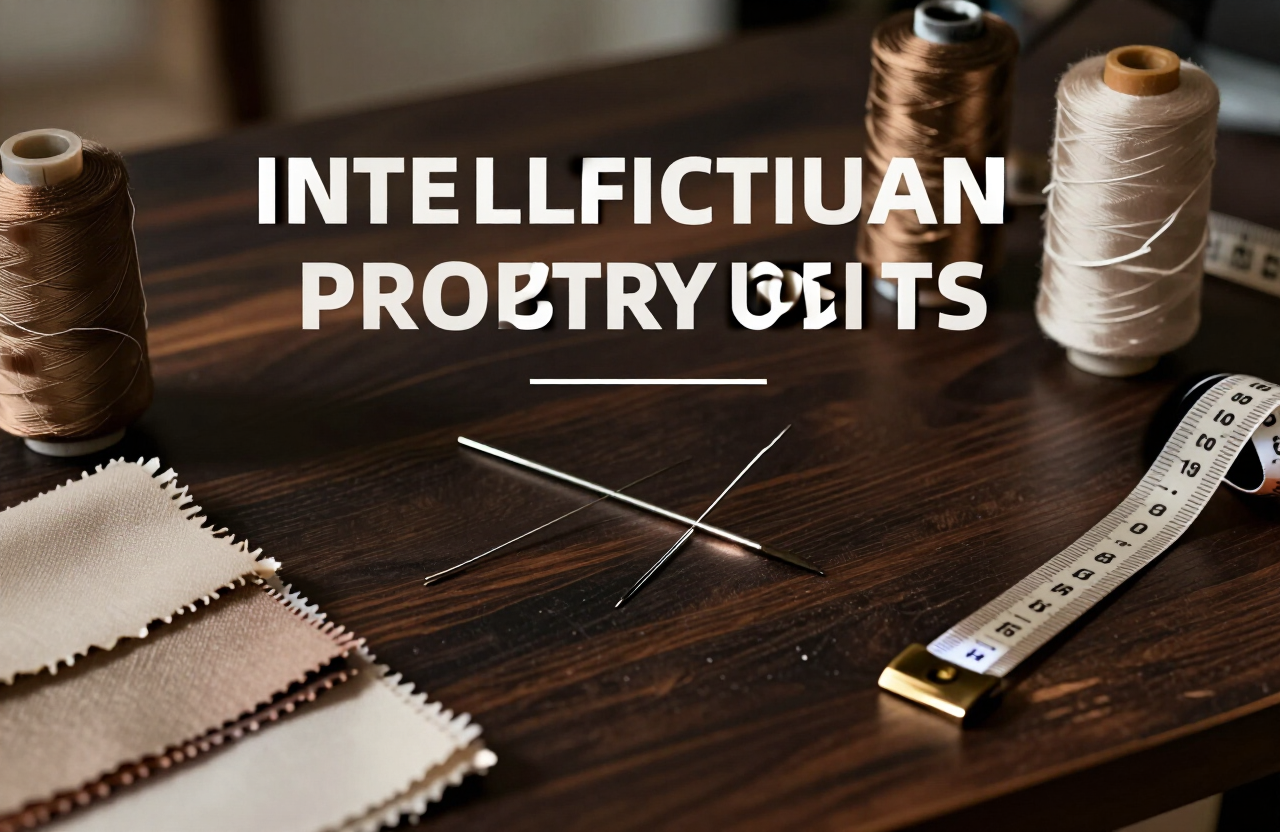
Needles, thread and fabric swatches — Nigeria’s IP framework was never built with fast-moving fashion in mind.
Fig.Needles, thread and fabric swatches — Nigeria’s IP framework was never built with fast-moving fashion in mind.
02 / 08

Introduction

The fashion industry comprises a wide range of activities, from the conception of a product, to design, to manufacture, as well as marketing and selling. For lawyers within the intellectual property space, it involves the procurement of IP rights — including trademarks, copyrights and patents — and the global licensing and subsequent enforcement of those rights. Understandably, in a world more concerned with the aesthetics and rewarding economic potential of creating a lucrative fashion line or brand, little if any attention is paid to protecting the designs that have become the hallmarks of the burgeoning fashion brands all over the world. Fashion lawyers work on anything from intellectual property — trademarks, brands, designs and copyright — to contracts, employment law and distribution agreements. Some shops and labels have their own in-house teams; others outsource to legal firms.

The fashion industry remains an interesting medley of intellectual property practice. Fashion law applies to apparel, footwear and even accessories. This emerging field of practice covers areas such as copyright, trademarks, service marks, utility patents, design patents, counterfeits, trade secrets, licensing agreements, and advertising and publicity, at every stage of the fashion business. It is believed that globally the fashion industry generates more than USD 2 trillion annually.

03 / 08

The emerging trends of IP protection in fashion law

Over the last ten to twenty years, the rise of the internet has changed the marketing and distribution of products. The introduction of social media created a new world for advertising and distribution, and has played a role in the rapid rise and fall in popularity of many brands. Social media has also helped foster co-branding and endorsement opportunities between fashion brands and celebrities or other social media personalities, which has the benefit of allowing all parties to draw from larger public audiences. These new developments in advertising and media strategy have led to the emergence of new legal intricacies that have helped develop “fashion law” into its own niche practice area.

The industry has recently seen increasing use of design patents and trademarks to protect intellectual property rights. These types of IP vehicle protect the “look” of a particular product, or certain novel design elements of such a product. An example of a design patent might be an ornamental sculptural element, such as an intricate bow, affixed to a product such as a shoe, or a distinctive colour scheme that appears on a particular brand’s products and creates an association between that colour scheme and the brand. The growing focus on these two areas of intellectual property protection may be happening because the other avenues — utility patents, trademarks and copyrights — are not always sufficient to prevent infringement.

The case of Star Athletica, L.L.C. v Varsity Brands, Inc. was a landmark case that went before the United States Supreme Court in 2017. The case centred on the protectability of cheerleading uniforms — specifically, whether certain creative elements of the design of a cheerleader’s uniform, such as the stripes of a chevron, could be protected under US copyright law. In other words, could these elements be separated, physically or conceptually, without taking away the purpose of the design, namely to be a cheerleading uniform?

In its decision, the Supreme Court clarified the standard for separability, holding, in general terms, that certain creative elements — whether two-dimensional or three-dimensional — of a garment may be protected by copyright law. However, it declined to speak to the protectability of, or the level of creativity inherent in, the specific uniforms in question. The case was remanded to the lower court to determine whether the cheerleading elements were sufficiently original to warrant protection. While it is not yet clear what the practical impact of the decision has been on the US fashion industry, it does offer designers some hope of being able to use copyright law to make a case for defending at least some creative aspects of their garments.

The law protects the sketch and drawing of a fashion designer or illustrator through the instrument of intellectual property known as copyright. Patent laws may also offer protection for designers. The European Union recognises registered and unregistered rights for garments and accessories as a whole. Similarly, in America, the Innovative Design Protection and Piracy Prevention Bill and the Innovative Design Protection Bill focused on protection for fashion designers, though neither gained enough traction in Congress to be passed into law.

The popular case of Christian Louboutin and Yves Saint Laurent (YSL) underscores the importance of intellectual property rights in fashion law. It concerned the alleged ownership of the red lacquered sole featured in footwear produced by Louboutin. In 2011, when Yves Saint Laurent released its monochrome footwear collection in a range of colours, including red, Louboutin brought an action for infringement of its red sole trademark. The US Court of Appeals for the Second Circuit ruled that Louboutin has the right to trademark protection over its red soles — while YSL may continue to sell shoes with red soles, provided the entire shoe is red.
04 / 08

The legal framework in Nigeria

The tremendous growth in the Nigerian fashion industry prompts a recognition of fashion law, and the need for the law to provide a useful guide on the legal issues faced by designers and other interacting forces in the fashion world. However, Nigeria has no comprehensive and specific legal framework governing the fashion industry — specific legislation protecting fashion brands is non-existent. IP practitioners have therefore resorted to the general protection afforded under the existing legal framework for intellectual property in Nigeria: the Copyright Act, the Patents and Designs Act, and the Trademarks Act.

Works of designers are artistic creations and can thus be protected by the Copyright Act. However, the design must not be intended to be used as a model or pattern to be multiplied by any industrial process — the Act does not appear to have considered the dynamics of the fashion industry.

Alternative protection would be available under the Patents and Designs Act; a combination of lines and colours, or any three-dimensional form with or without colours, is recognised as an industrial design. A limitation to this is the requirement that such a design must not have been in the public domain — impracticable in the fashion industry, which is a fast-paced sector dictated by trends, where reception by the public is an important factor. This calls to mind the need for urgent laws that offer adequate protection for fashion brands and their wares. The industry is flourishing even across borders, and may be stifled without effective laws.

05 / 08

Filing an IP claim in fashion law

The protection of designs in fashion law is a relatively developing concept in Nigeria — this may not be unconnected with the fact that fashion brands are yet to come to terms with the need to protect their brands. Undoubtedly, the protection of fashion designs should go beyond basic trademark registration; combating the IP problems posed by infringers is just as important as registering the designs in the first place. Even though there is no case law on this point in Nigeria, case law principles gleaned from decided cases show that there is a test and a well-developed standard that considers several factors, including:

The strength of the claimant’s trademark;

The similarity of the marks;

The relatedness of the products in the marketplace;

The likelihood that the senior user will “bridge the gap”, i.e. will develop a related product in the same market as the alleged infringer;

Evidence of actual consumer confusion;

Evidence of bad faith by the alleged infringer;

The respective quality and cost of the products; and

The sophistication of the consumers in the relevant market.

The legal framework in Nigeria at the moment is weak and insufficient to meet the dynamics of the fashion industry.

06 / 08

Concluding reflections

Apart from protecting the work of designers, there are other salient issues affecting the fashion industry that deserve legal protection. With the campaign against piracy in the music and entertainment industry gaining traction, fashion brands risk losing their goodwill and money to unscrupulous individuals who copy brand designs and logos and pass them off as their own, unless such campaigns are replicated in the fashion industry. Fashion design piracy is common in the industry, especially in developing countries like Nigeria. It involves the unauthorised copying of an original fashion design, which can take the form of either knock-offs or counterfeits. A knock-off is a close copy of the original, mimicking its design elements but sold under a different label; a counterfeit is a copy of the original fashion design as well as the brand logo or label — sold in an attempt to pass off as the original product. Counterfeiting may also involve piracy in the fashion design itself, besides piracy in the logo or label of the fashion brand.

Like most sectors of the leisure industry that are driven by talent and creativity, the fashion industry is exposed to manifold risks. It is regrettable that little attempt has been made to protect the rights of fashion brands that have become victims of unwholesome practices bordering on counterfeiting, passing off and knock-offs.

Whether a small, medium or large fashion house, the brand is the most valuable part of a fashion business. Customers associate the brand with specific styles, quality and experiences, and many fashion houses invest much of their time and money building a relationship with their customers through their brand. However, if the brand is not adequately protected through trademark filing and enforcement, customers may be unable to distinguish the style and experience they value from a counterfeit brand found elsewhere — with a detrimental effect on the bottom line.

For this reason, it is important that a fashion house protect its brand through trademark registration, and its assets through copyright law. This reduces the risk of others borrowing or stealing from a given brand, or using it for other malicious purposes, and provides the brand with the legal standing to pursue cases where copyright infringement has taken place. The most distinguishing features a fashion house should protect through trademarks are its brand name and logo, as these are the most identifiable IP assets for a brand, whether a high-fashion or a high-street brand. The legal framework in Nigeria at the moment is weak and insufficient to meet the dynamics of the fashion industry. In all, Nigeria needs an urgent overhaul of its laws in this area, by enacting statutes and regulations specific to the needs of the fashion industry.

07 / 08

References

1. “Is Fashion Law as Glamorous as it Sounds?”, The Guardian, 2 August 2016.

2. Thorstein Veblen, The Theory of the Leisure Class (1994).

3. WIPO Magazine, wipo.int/wipo_magazine/en/2018/04/article_0006.html.

4. Marcella Ballard, “Navigating Fashion Law”.

5. Star Athletica, L.L.C. v Varsity Brands, Inc., 137 S. Ct. 1002 (2017).

6–7. WIPO Magazine, as above.

8. The Innovative Design Protection and Piracy Prevention Bill and the Innovative Design Protection Bill were introduced in 2010 and 2012 respectively, but did not gain enough traction in Congress and were not passed.

9. Christian Louboutin S.A. v Yves Saint Laurent America Holding, Inc., No. 11-3303 (2d Cir. 2012).

10. Section 1(3) of the Copyright Act.

11. Section 12 of the Patents and Designs Act.

12. brandstock.com/intellectual-property-in-the-fashion-industry.

08 / 08

Protecting a fashion brand or design?

Kempes & Kaplan LP advises fashion houses and designers on IP protection, brand enforcement and licensing. Write to counsel@kandklp.com.

This article is provided for general information only and does not constitute legal advice. It is not a substitute for specific advice on any particular matter.Kempes & Kaplan LP accepts no responsibility for any loss arising from reliance on this material.

Engage counsel

Discuss how this applies to your matter.

Book a call with us